Champlin industry and AI adoption research
Secure AI opportunities for Champlin's distinct economy
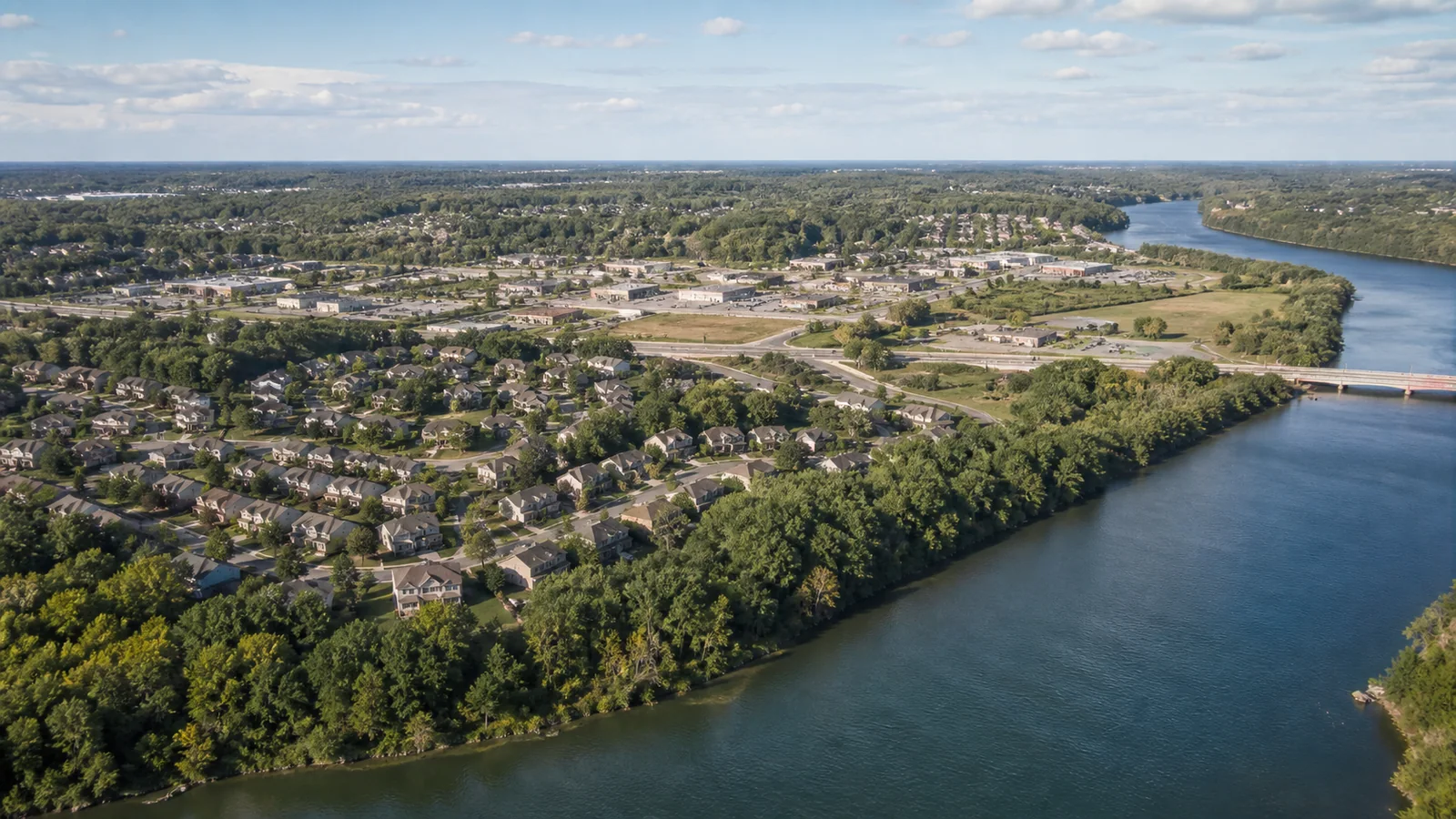
Champlin is an established Mississippi River community approaching full development. Its comprehensive plan addresses growth, redevelopment, public facilities, transportation, housing, natural resources, fiscal impacts, commercial areas, and the balance between community character and future investment. This report translates that public evidence into bounded AI opportunities while treating privacy, security, accessibility, human authority, deployment, monitoring, maintenance, controlled upgrades, and verified recovery as core system requirements.
City context and industry evidence
Place and infrastructure shape how Champlin works12
Champlin is an established Mississippi River community approaching full development. Its comprehensive plan addresses growth, redevelopment, public facilities, transportation, housing, natural resources, fiscal impacts, commercial areas, and the balance between community character and future investment. The evidence supports a location-specific operating thesis; it does not prove that every organization in the city uses the same workflow or technology.
The Mississippi River, Elm Creek and other natural systems, regional roads, neighborhoods, local commercial districts, public facilities, and diminishing vacant land increasingly focus economic activity on reinvestment, property improvement, service delivery, and coordinated redevelopment. Any AI design should preserve the distinctions among organizations, sites, records, responsibilities, and affected people rather than treating the city name as a substitute for discovery.
Current operating landscape
Three practical industry contexts emerge from the public record12
The selected industry contexts are bounded lenses for workflow design, not a ranking or exhaustive economic census. Each proposed application begins with a specific record set, responsible owner, decision boundary, measurable baseline, and named fallback.
Industry language is intentionally cautious. Public evidence can support a design hypothesis, but only organization-specific discovery can establish data authority, system dependencies, regulatory applicability, acceptable risk, and whether AI is useful.
Evidence limits
Public research does not establish adoption or outcomes13
The cited sources describe Champlin's place, development priorities, infrastructure, institutions, or industry mix. They do not provide a representative city-level AI-adoption percentage, prove that a named workflow exists at any local organization, or establish that an AI system would improve cost, quality, speed, safety, revenue, or satisfaction.
A defensible pilot therefore records the baseline, representative and adverse cases, accessibility needs, error costs, reviewer disagreement, correction paths, security tests, recovery proof, and stopping rules before any broader release.
Operating model
Deployment is a controlled organizational change34
For Champlin organizations, implementation should start with one read-only, reversible workflow. Source permissions, retention, logging, monitoring, human escalation, vendor dependencies, backup, restoration, and retirement belong in the design before model selection.
Material changes to sources, prompts, models, permissions, interfaces, integrations, certificates, dependencies, or recovery procedures receive impact review and proportionate regression testing. When authority or evidence is missing, preserve the work and route the case to a named person.
Current economic strengths
Industries shaping Champlin, MN
Commercial and retail services12
Commercial and retail services is included because the cited public record for Champlin describes the location, infrastructure, institutions, business mix, or development pattern that supports this operating context. The page does not claim that every local organization has the same systems, risks, or AI readiness.
Redevelopment and housing operations12
Redevelopment and housing operations is included because the cited public record for Champlin describes the location, infrastructure, institutions, business mix, or development pattern that supports this operating context. The page does not claim that every local organization has the same systems, risks, or AI readiness.
Community and professional services12
Community and professional services is included because the cited public record for Champlin describes the location, infrastructure, institutions, business mix, or development pattern that supports this operating context. The page does not claim that every local organization has the same systems, risks, or AI readiness.
Practical opportunities
AI applications for local industry workflows
Source-linked commercial and retail services operations assistant134
Workflow: Retrieve approved procedures, records, schedules, exceptions, and status evidence for one bounded commercial and retail services workflow in Champlin. Show the governing source, owner, version, effective date, access boundary, unresolved conflicts, and named manual route. Test delayed, partial, contradictory, malicious, and unavailable inputs before release.
Potential value: Measure retrieval accuracy, stale-source rejection, access leakage, exception routing, correction effort, and recovery performance. The assistant cannot make professional, safety, financial, care, release, or public decisions. Results describe a candidate workflow for Champlin, not a deployed customer system or promised outcome.
Required controls
- Approved-source allowlist and purpose
- Least-privilege access inherited from systems of record
- Evidence-linked human review and abstention
- Monitored fallback, recovery, and controlled change
Source-linked redevelopment and housing operations operations assistant134
Workflow: Retrieve approved procedures, records, schedules, exceptions, and status evidence for one bounded redevelopment and housing operations workflow in Champlin. Show the governing source, owner, version, effective date, access boundary, unresolved conflicts, and named manual route. Test delayed, partial, contradictory, malicious, and unavailable inputs before release.
Potential value: Measure retrieval accuracy, stale-source rejection, access leakage, exception routing, correction effort, and recovery performance. The assistant cannot make professional, safety, financial, care, release, or public decisions. Results describe a candidate workflow for Champlin, not a deployed customer system or promised outcome.
Required controls
- Approved-source allowlist and purpose
- Least-privilege access inherited from systems of record
- Evidence-linked human review and abstention
- Monitored fallback, recovery, and controlled change
Source-linked community and professional services operations assistant134
Workflow: Retrieve approved procedures, records, schedules, exceptions, and status evidence for one bounded community and professional services workflow in Champlin. Show the governing source, owner, version, effective date, access boundary, unresolved conflicts, and named manual route. Test delayed, partial, contradictory, malicious, and unavailable inputs before release.
Potential value: Measure retrieval accuracy, stale-source rejection, access leakage, exception routing, correction effort, and recovery performance. The assistant cannot make professional, safety, financial, care, release, or public decisions. Results describe a candidate workflow for Champlin, not a deployed customer system or promised outcome.
Required controls
- Approved-source allowlist and purpose
- Least-privilege access inherited from systems of record
- Evidence-linked human review and abstention
- Monitored fallback, recovery, and controlled change
Risk and accountability
Security, privacy, safety, and compliance
Intended use, evidence, and accountable authority3
For Champlin, name the exact users, workflow, allowed records, permitted outputs, prohibited actions, affected people, failure consequences, accountable owner, escalation route, and manual fallback. Outputs expose source, version, scope, freshness, and uncertainty; a qualified person retains every consequential decision.
Privacy, security, and record separation34
Separate the organizations, sites, customers, workers, learners, patients, visitors, parcels, projects, and regulated records implicated by the Champlin workflow. Apply purpose limitation, minimum access, environment separation, secret protection, secure transfer, audit logging, upload screening, retention, disposal, and access recertification to source data and generated artifacts.
Safe failure, monitoring, maintenance, and recovery34
Monitor corrections, missed exceptions, false alerts, reviewer disagreement, access violations, queue age, drift, latency, manual-route use, vendor failure, and recovery for the complete Champlin workflow. Maintain controlled releases, rollback, incident response, verified restoration, reassigned escalation, and planned retirement for models, prompts, source indexes, permissions, and dependencies.
Authorized and recovery-gated
Continuous security validation for local industries
These scoped validation patterns preserve written authorization, recovery readiness, evidence, and accountable human decisions. They do not start testing or scanning from this page.
Continuous security validation for commercial and retail services134
Protected operations
For Champlin's commercial and retail services context, protect commerce and booking configurations, inventory and pricing records, payment and loyalty connections, workforce and vendor accounts, customer communications, and service queues. The local operating lens is Mississippi River, Elm Creek natural areas, established neighborhoods, commercial districts, and redevelopment sites; the cited record describes this alongside the city's particular business and infrastructure pattern. The exact customer environment, data classification, authority, and consequences must be established before any assessment.
Change triggers
- Revalidate after commerce, point-of-sale, booking, payment, inventory, promotion, identity, certificate, dependency, and vendor changes.
- Recheck the workflow after manual administrative edits, emergency exceptions, ownership changes, recovery-procedure revisions, or material vendor notices affecting commercial and retail services. In Champlin, the review should also trace dependencies created by this local pattern: The Mississippi River, Elm Creek and other natural systems, regional roads, neighborhoods, local commercial districts, public facilities, and diminishing vacant land increasingly focus economic activity on reinvestment, property improvement, service delivery, and coordinated redevelopment.
Validation coverage
- Within verified written authorization and exact target scope, test role limits, synthetic purchases, price and refund safeguards, duplicate-message handling, vendor failure, alerts, and rollback without charging customers. Apply those checks to one named Champlin workflow and preserve the responsible owner, source state, exception route, and local operational dependency in the evidence.
- Use a representative mirror first, synthetic accounts or disposable data where practical, harmless markers, and minimum-proof stopping; bounded production confirmation requires separate human approval.
Recovery readiness
Verified recovery readiness requires an isolated, successfully restored and functionally checked path for the configurations, identities, records, integration state, audit evidence, and manual procedures supporting commercial and retail services before target confirmation. The restoration exercise must reproduce the vendor, infrastructure, and organizational handoffs implied by Champlin's documented operating landscape, not merely restore files.
Human boundaries
AI analysis remains advisory. Human approval controls target scope, release, operational decisions, exceptions, risk acceptance, communication, and restoration; AI cannot authorize targets, accept risk, approve release, or modify production. Payment, consumer, accessibility, privacy, and contractual requirements remain context-specific; validation cannot guarantee compliance or prevent every incident. This bounded engagement cannot guarantee security, compliance, or prevention of every incident.
Business value
For Champlin, this scoped pattern can reveal whether changes affecting commercial and retail services preserved accountable access, evidence, safe failure, and recoverability before a responsible person accepts the change. It also makes the city's specific mix of geography, infrastructure, institutions, corridors, and vendor relationships visible in release and recovery evidence instead of hiding those dependencies behind a generic checklist.
Continuous security validation for redevelopment and housing operations134
Protected operations
For Champlin's redevelopment and housing operations context, protect parcel, project, permit, contract, inspection, vendor, schedule, financing, public-notice, and asset-maintenance records. The local operating lens is Mississippi River, Elm Creek natural areas, established neighborhoods, commercial districts, and redevelopment sites; the cited record describes this alongside the city's particular business and infrastructure pattern. The exact customer environment, data classification, authority, and consequences must be established before any assessment.
Change triggers
- Revalidate after planning, permitting, contract, document, identity, GIS, dependency, certificate, vendor, and workflow changes.
- Recheck the workflow after manual administrative edits, emergency exceptions, ownership changes, recovery-procedure revisions, or material vendor notices affecting redevelopment and housing operations. In Champlin, the review should also trace dependencies created by this local pattern: The Mississippi River, Elm Creek and other natural systems, regional roads, neighborhoods, local commercial districts, public facilities, and diminishing vacant land increasingly focus economic activity on reinvestment, property improvement, service delivery, and coordinated redevelopment.
Validation coverage
- Within verified written authorization and exact target scope, test source lineage, role boundaries, synthetic applications, approval separation, public-record safeguards, vendor failure, audit events, and rollback. Apply those checks to one named Champlin workflow and preserve the responsible owner, source state, exception route, and local operational dependency in the evidence.
- Use a representative mirror first, synthetic accounts or disposable data where practical, harmless markers, and minimum-proof stopping; bounded production confirmation requires separate human approval.
Recovery readiness
Verified recovery readiness requires an isolated, successfully restored and functionally checked path for the configurations, identities, records, integration state, audit evidence, and manual procedures supporting redevelopment and housing operations before target confirmation. The restoration exercise must reproduce the vendor, infrastructure, and organizational handoffs implied by Champlin's documented operating landscape, not merely restore files.
Human boundaries
AI analysis remains advisory. Human approval controls target scope, release, operational decisions, exceptions, risk acceptance, communication, and restoration; AI cannot authorize targets, accept risk, approve release, or modify production. Land-use, procurement, housing, environmental, accessibility, and public-record duties require qualified review; validation cannot approve a project or certify compliance. This bounded engagement cannot guarantee security, compliance, or prevention of every incident.
Business value
For Champlin, this scoped pattern can reveal whether changes affecting redevelopment and housing operations preserved accountable access, evidence, safe failure, and recoverability before a responsible person accepts the change. It also makes the city's specific mix of geography, infrastructure, institutions, corridors, and vendor relationships visible in release and recovery evidence instead of hiding those dependencies behind a generic checklist.
Continuous security validation for community and professional services134
Protected operations
For Champlin's community and professional services context, protect client and project records, contracts, email and collaboration spaces, knowledge systems, billing data, SaaS identities, vendor connections, approvals, and retention rules. The local operating lens is Mississippi River, Elm Creek natural areas, established neighborhoods, commercial districts, and redevelopment sites; the cited record describes this alongside the city's particular business and infrastructure pattern. The exact customer environment, data classification, authority, and consequences must be established before any assessment.
Change triggers
- Revalidate after CRM, document, email, project, billing, knowledge, model, dependency, identity, certificate, and integration changes.
- Recheck the workflow after manual administrative edits, emergency exceptions, ownership changes, recovery-procedure revisions, or material vendor notices affecting community and professional services. In Champlin, the review should also trace dependencies created by this local pattern: The Mississippi River, Elm Creek and other natural systems, regional roads, neighborhoods, local commercial districts, public facilities, and diminishing vacant land increasingly focus economic activity on reinvestment, property improvement, service delivery, and coordinated redevelopment.
Validation coverage
- Within verified written authorization and exact target scope, test client separation, least privilege, sharing, source lineage, approval records, retention, audit events, integration failure, and rollback with synthetic engagements. Apply those checks to one named Champlin workflow and preserve the responsible owner, source state, exception route, and local operational dependency in the evidence.
- Use a representative mirror first, synthetic accounts or disposable data where practical, harmless markers, and minimum-proof stopping; bounded production confirmation requires separate human approval.
Recovery readiness
Verified recovery readiness requires an isolated, successfully restored and functionally checked path for the configurations, identities, records, integration state, audit evidence, and manual procedures supporting community and professional services before target confirmation. The restoration exercise must reproduce the vendor, infrastructure, and organizational handoffs implied by Champlin's documented operating landscape, not merely restore files.
Human boundaries
AI analysis remains advisory. Human approval controls target scope, release, operational decisions, exceptions, risk acceptance, communication, and restoration; AI cannot authorize targets, accept risk, approve release, or modify production. Professional, contractual, privacy, and records duties vary by organization and engagement; validation does not certify them. This bounded engagement cannot guarantee security, compliance, or prevention of every incident.
Business value
For Champlin, this scoped pattern can reveal whether changes affecting community and professional services preserved accountable access, evidence, safe failure, and recoverability before a responsible person accepts the change. It also makes the city's specific mix of geography, infrastructure, institutions, corridors, and vendor relationships visible in release and recovery evidence instead of hiding those dependencies behind a generic checklist.
Formal software lifecycle
From scoped opportunity to maintained system
- 01
Choose one bounded workflow
Document Champlin users, systems, records, decisions, exceptions, baseline performance, governing requirements, accountable owners, and the manual fallback before model selection.
- 02
Design evidence and authority
Specify approved sources, roles, citations, prohibited actions, escalation, retention, accessibility, security, logging, correction, acceptance thresholds, recovery gates, and stop conditions in a reviewable design.
- 03
Build a contained read-only pilot
Use minimized representative data, separate environments, protected configuration, read-only connections where practical, visible source state, explicit uncertainty, and complete test instrumentation.
- 04
Challenge routine and adverse cases
Test common, rare, stale, conflicting, inaccessible, malicious, and unavailable-data cases plus privacy, security, accessibility, recovery, escalation, and human-review performance.
- 05
Deploy and maintain the whole workflow
Release in stages, sample outcomes, review corrections and incidents, recertify access, test restoration, monitor drift, and require impact analysis and regression evidence for material upgrades.
How this report was prepared
Methodology and evidence limits
IMS reviewed the cited official, statistical, and institutional material for Champlin; separated observed place and industry evidence from design recommendations; and applied NIST AI RMF and CISA Secure by Design principles to the proposed workflows. The sources do not establish local AI adoption rates, customer demand, causation, or guaranteed outcomes. Every implementation requires current source review, exact intended-use definition, representative testing, accountable owners, and a maintained manual alternative.
Evidence
Sources
- 2040 Comprehensive PlanCity of Champlin, 2026-03-01
- Strategic Plan FY 2021-2024City of Champlin, 2021-05-01
- Artificial Intelligence Risk Management Framework (AI RMF 1.0)National Institute of Standards and Technology, 2023-01-26
- Secure by DesignCybersecurity and Infrastructure Security Agency, 2023-04-13
FAQ
Questions about AI and Champlin, MN
Does IMS claim a Champlin office or clients?
No. This report analyzes public information and proposes bounded workflows. It does not claim a Champlin office, client relationship, endorsement, or completed project.
What is a reasonable first Champlin AI pilot?
A narrow, read-only, source-linked workflow with measurable error costs, a named reviewer, and a maintained manual route is easier to govern than autonomous decisions or transactions.
Can an AI assistant combine every available business record?
Not safely by default. Every source needs a permitted purpose, owner, access rule, retention policy, security boundary, quality standard, and tested use. Technical access does not establish authority.
What happens after a pilot performs well?
Validate the complete workflow, deploy in stages, monitor corrections and failures, maintain human fallback, recertify access, test restoration, and control every material source, model, prompt, permission, and integration update.